
Mudroom Materials That Stand Up to New England Weather
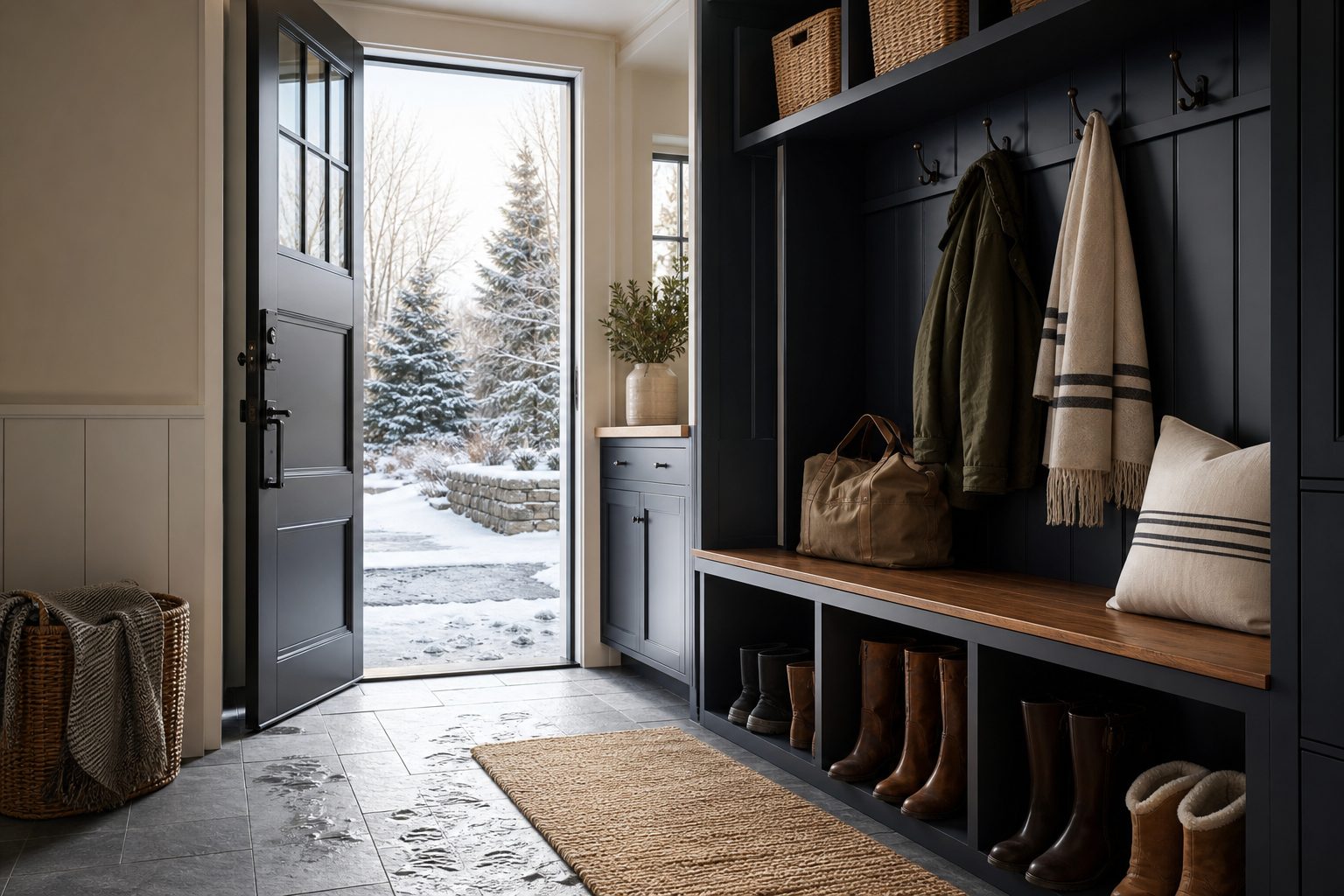
Luxury Mudroom Remodeling Ideas for New England Homes
A well-planned mudroom creates a practical transition between New England weather and the finished interior of your home. It needs to accommodate snowy boots, road salt, wet coats, muddy paws, sports equipment, and rapid temperature changes without feeling like a purely utilitarian space.
The most successful luxury mudrooms combine resilient materials with custom storage, comfortable circulation, and finishes that complement the rest of the house. These New England mudroom remodeling ideas can help Massachusetts homeowners make informed choices before construction begins.
What New England Weather Demands From a Mudroom
Mudroom surfaces experience conditions that are uncommon in most interior rooms. Melting snow introduces standing water. Salt and grit can scratch finishes. Damp outerwear increases humidity, while repeated freeze and thaw cycles can affect poorly insulated entry areas.
Material selection is only part of the solution. The room also needs a sound subfloor, appropriate insulation, effective air sealing, and a layout that keeps water and debris away from adjacent hardwood floors. In an older Massachusetts home, existing framing, uneven floors, limited wall depth, and outdated wiring may influence what can be built.
A coordinated home remodeling team can evaluate these conditions while planning the room’s finishes, storage, lighting, and connection to the rest of the home.
Choose Flooring That Resists Water, Salt, and Grit
Flooring carries the greatest burden in a hardworking mudroom. Appropriate options include:
Porcelain tile
Porcelain tile is a strong choice for wet, high-traffic entry spaces. It is available in stone, concrete, and wood-inspired styles, making it possible to create a refined look without relying on a more moisture-sensitive surface.
Select a textured or matte finish that provides traction when wet. Grout color also matters. A medium or darker tone may be more forgiving than bright white, although every grout installation still requires routine cleaning.
Natural stone
Slate and other dense natural stones can give a mudroom a timeless New England character. Performance varies by stone, finish, and installation method, so samples should be evaluated for absorption, texture, sealing requirements, and salt exposure before selection.
Luxury vinyl plank or tile
Quality vinyl flooring can provide water resistance, visual warmth, and easier maintenance. It may work well when homeowners want a softer feel underfoot or need to manage floor height transitions. Product specifications and subfloor requirements should be reviewed carefully rather than choosing on appearance alone.
Hardwood can be used in some mudrooms, but it requires greater control of moisture and grit. If visual continuity with an adjoining room is important, a tiled landing or inset at the exterior door can help protect the surrounding wood.
Build Storage for Wet and Heavy Gear
Luxury mudroom storage should be attractive, but its internal construction matters just as much as the visible finish. Cabinet boxes made with quality plywood and durable interior finishes generally offer better support for heavy gear than low-grade particleboard.
Useful storage features include:
- Ventilated lockers or tall cabinets for damp coats
- Drawers or baskets for hats, gloves, and pet supplies
- Open shoe storage that allows wet footwear to dry
- Adjustable shelves for changing seasonal needs
- A bench with a durable top and reinforced construction
- Dedicated compartments for backpacks and sports equipment
- Concealed charging locations for phones and household devices
Painted wood can create a tailored appearance, but lower sections are vulnerable to wet boots and cleaning tools. Durable laminate, metal accents, removable trays, or moisture-resistant panels can provide added protection in the most exposed areas.
Use Countertop and Bench Materials That Clean Easily
A mudroom counter may become a landing zone for bags, packages, keys, or gardening supplies. Quartz, sintered stone, and properly selected natural stone can provide a polished surface that is easier to clean than unfinished wood.
For a bench seat, consider the expected use. Painted wood offers a built-in furniture look, while stone or durable composite surfaces handle wet clothing and repeated cleaning more readily. A removable upholstered cushion can add comfort without making fabric the primary work surface.
Protect Walls, Trim, and Hardware
Paint alone may not be enough for walls exposed to wet coats and dirty equipment. Wainscoting, vertical paneling, washable wall coverings, or tile can protect high-contact areas while adding architectural character.
For painted surfaces, select a washable finish appropriate for interior trim or walls. Baseboards and door casings should be detailed to limit moisture exposure at the floor. Hardware should feel substantial and use finishes suitable for repeated contact with damp gear.
Hooks also need solid backing. Blocking installed inside the wall allows hooks and rails to support more weight than fasteners attached only to drywall.
Plan for Drainage, Heat, and Ventilation
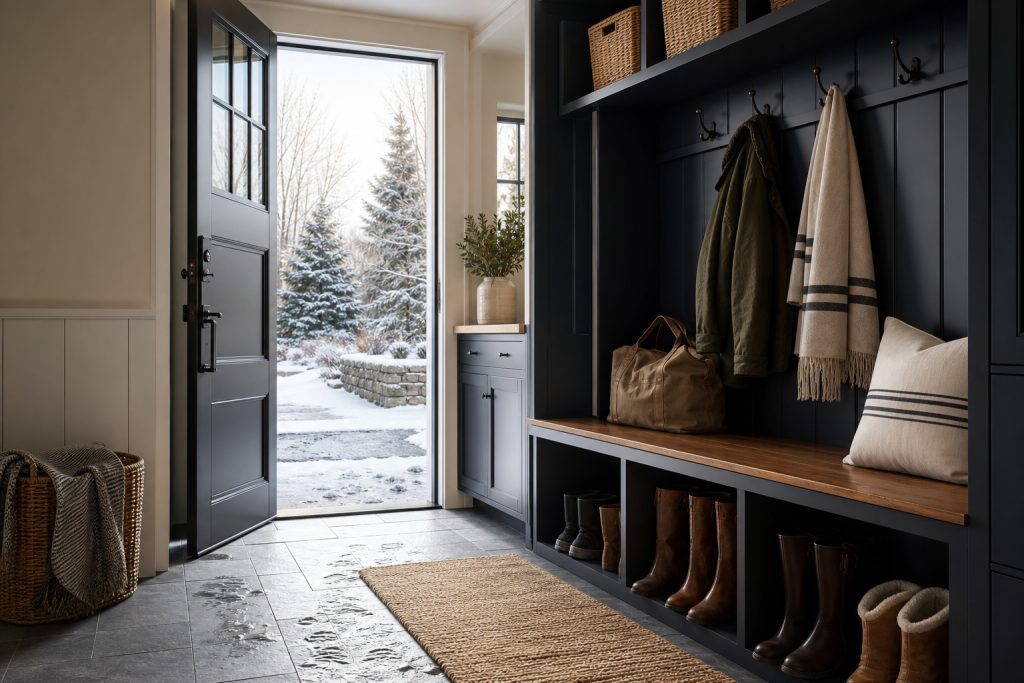
The best material can still underperform if water has nowhere to go. A recessed boot tray, washable floor mat, or tiled wet zone near the entrance can contain melting snow. Any floor drain or plumbing feature must be assessed as part of the project scope and applicable local requirements.
Radiant floor heat can improve comfort and encourage faster drying, particularly under compatible tile or stone. Ventilation and conditioned air also matter. A cold, closed-off room may hold moisture longer than a space integrated thoughtfully with the home’s heating and ventilation strategy.
These decisions should be made during pre-construction, not after finishes have been ordered. Sordan Construction’s Massachusetts remodeling planning guide explains why defining scope and accounting for older-home conditions early can reduce uncertainty during a renovation.
Coordinate the Mudroom With the Rest of Your Home
A high-end mudroom should feel connected to nearby kitchens, hallways, and living areas. Cabinet profiles, flooring tones, trim details, and metal finishes can reference the surrounding interior without requiring every material to match.
Planning and construction under one design-build team also helps coordinate practical details such as floor heights, door swings, electrical locations, lighting, insulation, cabinetry, and finish transitions. That coordination is especially valuable when converting a porch, reworking a side entrance, or renovating an older service area.
Related Resources
Dust Control and Home Protection During a Major Remodel
What to Plan for Smart Home Features Before Walls Are Closed
Start Planning Your Massachusetts Mudroom Remodel
The right mudroom materials balance appearance, maintenance, moisture resistance, and long-term function. Rather than choosing finishes independently, begin with the room’s entry conditions, storage needs, existing structure, and relationship to adjacent spaces.
Sordan Construction provides all-in-one design, construction, and remodeling services for homeowners across Greater Boston and the Merrimack Valley. Schedule a consultation to discuss your mudroom goals, project scope, and next steps.
