
Generator vs. Battery Backup for a Boston Home Remodel
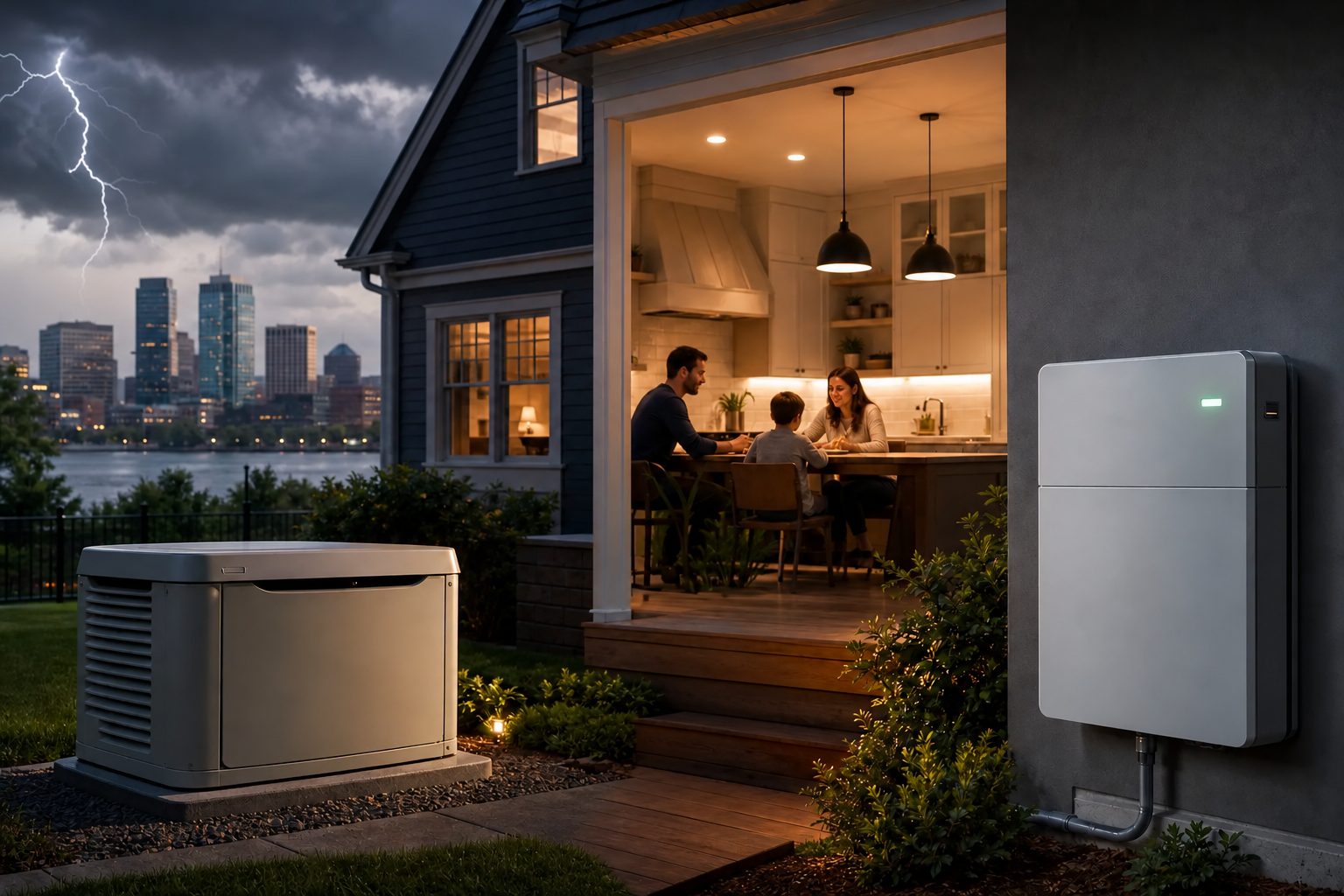
Choosing Between Generator and Battery Backup Power for Boston Homes
A major renovation is an ideal time to plan backup power. Walls may already be open, electrical service may be under review, and homeowners can decide which circuits should remain available during a utility outage.
For anyone comparing a generator vs battery backup for a Boston home, there is no universal winner. The right choice depends on the loads you want to support, expected outage duration, available fuel, acceptable noise, property constraints, and long-term energy goals.
Generator vs. Battery Backup at a Glance
| Consideration | Standby generator | Battery backup |
|---|---|---|
| Energy source | Natural gas, propane, or another approved fuel | Stored electricity, with optional solar charging |
| Outage duration | Can operate while fuel remains available | Limited by stored capacity and connected loads |
| Startup | Automatic on many standby systems | Typically near-instantaneous |
| Noise | Produces engine and exhaust noise | Quiet during operation |
| Maintenance | Engine testing, inspection, and service | Generally fewer mechanical service needs |
| Placement | Requires compliant exterior space | Requires an approved location and operating environment |
| High-demand loads | May support larger loads when properly sized | Feasibility depends heavily on battery and inverter capacity |
Actual performance depends on system design, equipment specifications, installation conditions, and local requirements.
When a Standby Generator May Be the Better Fit
A standby generator may suit homeowners who want to support substantial loads or prepare for an extended outage. Depending on its size and the home’s systems, it may power essentials such as refrigeration, lighting, heating equipment, a well pump, a sump pump, and selected kitchen circuits.
A generator still requires careful planning. The project team must evaluate:
- Fuel availability and capacity
- Exterior clearances and equipment location
- Exhaust, noise, and proximity to neighboring properties
- Automatic transfer equipment
- Electrical service and panel compatibility
- Access for maintenance
- Permit and inspection requirements
Dense Boston-area lots and historic properties can make placement especially important. A generator should not be selected before confirming that there is a practical, compliant location for it.
When Battery Backup May Be the Better Fit
Battery storage may appeal to homeowners who prioritize quiet operation, automatic power delivery, and compatibility with solar panels. It can be particularly effective when the goal is to support a defined group of critical circuits rather than every electrical load in the house.
A battery system may keep lighting, internet equipment, refrigeration, security devices, and selected outlets operating during an outage. Larger loads may require more storage, greater inverter capacity, load controls, or multiple batteries.
Stored energy is finite. Homeowners should understand both power and energy:
- Power determines which appliances can run at the same time.
- Energy determines how long those appliances can run.
A battery that handles a brief outage may not support several days of heating, cooling, cooking, and other high-demand uses without recharging.
Consider a Hybrid Backup System
Some homes benefit from a system that combines battery storage with a generator or solar array. A battery can provide quiet, immediate support for selected circuits, while another source can extend operation during a prolonged outage.
Hybrid systems introduce additional controls, equipment, and coordination. They should be planned as one electrical strategy rather than assembled as unrelated products.
Start With a Critical-Loads Plan
Before comparing equipment, identify what the household truly needs during an outage. Priorities may include:
- Heating controls and circulation equipment
- Refrigerators and freezers
- Sump, sewage ejector, or well pumps
- Medical or accessibility equipment
- Internet, security, and communications
- Essential lighting and receptacles
- Selected cooking appliances
- Garage doors or powered entry systems
Record each load’s operating and startup requirements. Motors, pumps, compressors, and heating equipment can require more power when starting. A licensed electrician or qualified system provider should complete the load calculations and verify compatibility.
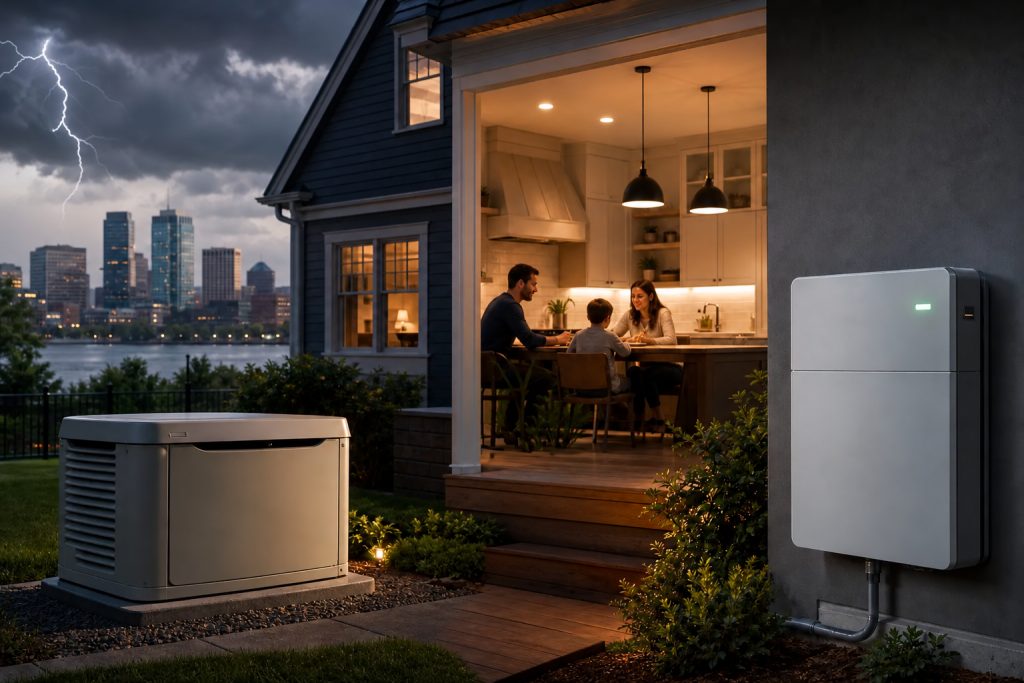
Why Backup Power Belongs in Pre-Construction Planning
Backup power affects more than the equipment itself. It can influence panel configuration, conduit routes, wall space, exterior penetrations, utility coordination, ventilation, fuel piping, equipment pads, and finish work.
Planning early can also reveal whether the home needs service upgrades or a dedicated critical-load panel. This is particularly valuable in older Massachusetts homes, where existing wiring, crowded panels, or previous alterations may constrain the design.
Sordan Construction’s guide to luxury home remodeling in Greater Boston explains why major systems should be considered as part of the whole-home scope. Homeowners can also review what to plan for smart home features before walls are closed, since networking, security, controls, and backup power often depend on coordinated electrical infrastructure.
Permits, Equipment Approval, and Local Review
Generator and battery installations may involve electrical, building, fire-safety, zoning, utility, or fuel-related requirements. Rules can vary by municipality and project conditions. Equipment listings, disconnects, clearances, protection, ventilation, and inspection sequencing should be confirmed before installation.
Do not assume that a system allowed in one Massachusetts community will receive identical treatment in another. The authority having jurisdiction, utility provider, licensed electrician, and other qualified professionals should verify current requirements.
Related Resources
Boston Luxury Condo Remodeling: Approvals, Building Rules, and Construction Planning
Home Elevator Installation During a Luxury Boston Remodel
Which Backup System Is Right for Your Remodel?
A generator may be appropriate when long-duration operation and larger loads are the main priorities. A battery may be preferable when quiet operation, selected critical circuits, and solar compatibility matter more. A hybrid strategy may offer broader resilience when the property, budget, and project scope support it.
The best decision begins with a documented load plan and coordinated pre-construction review, not a product comparison alone. During luxury home remodeling in Boston, integrating backup power with the electrical plan can reduce compromises and help the finished home function as a connected system.
Sordan Construction provides coordinated design-build planning and construction for custom renovations across Greater Boston and the Merrimack Valley. Schedule a consultation to discuss your remodeling goals, backup-power priorities, scope, and next steps.
